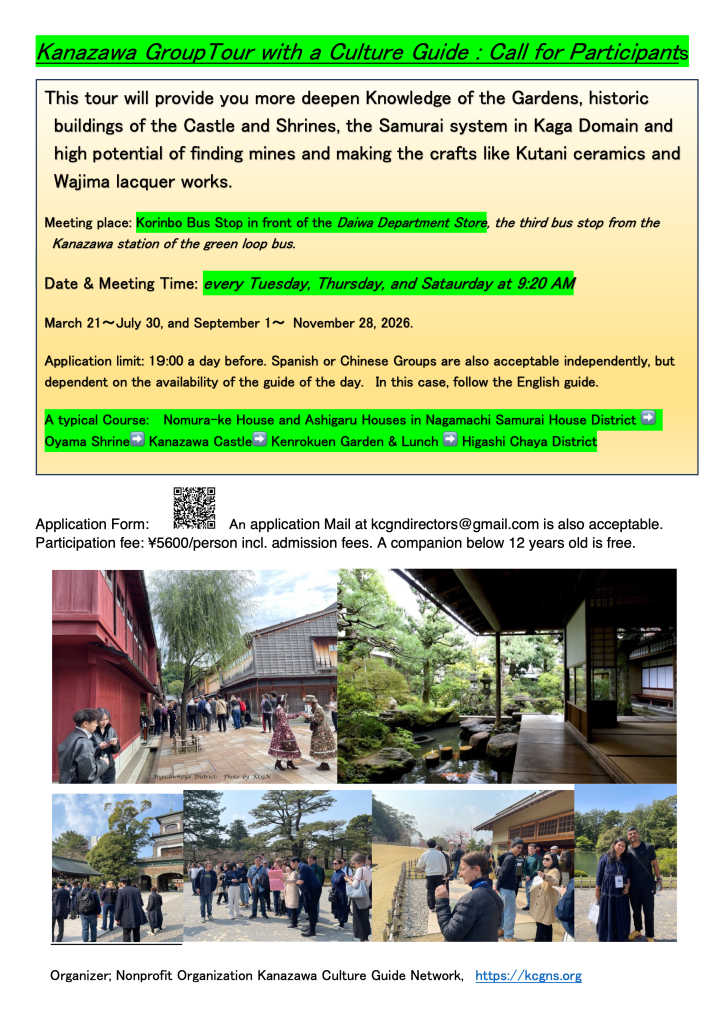
Visit the following WEB site as well.
https://visitkanazawa.jp/en/activities/detail_2421.html 
Higashi-chaya geisha-house district: The beautiful wooden chaya houses have been well-preserved and the area is officially designated as a Japanese cultural asset. Historically a popular entertainment district, Higashi Chaya District was where geisha entertained wealthy bureaucrats and rich merchants. Geisha culture still flourishes here. In the evenings, you can hear the sound of the shamisen and drums playing from the teahouses, as the geisha sing, dance and play traditional games.
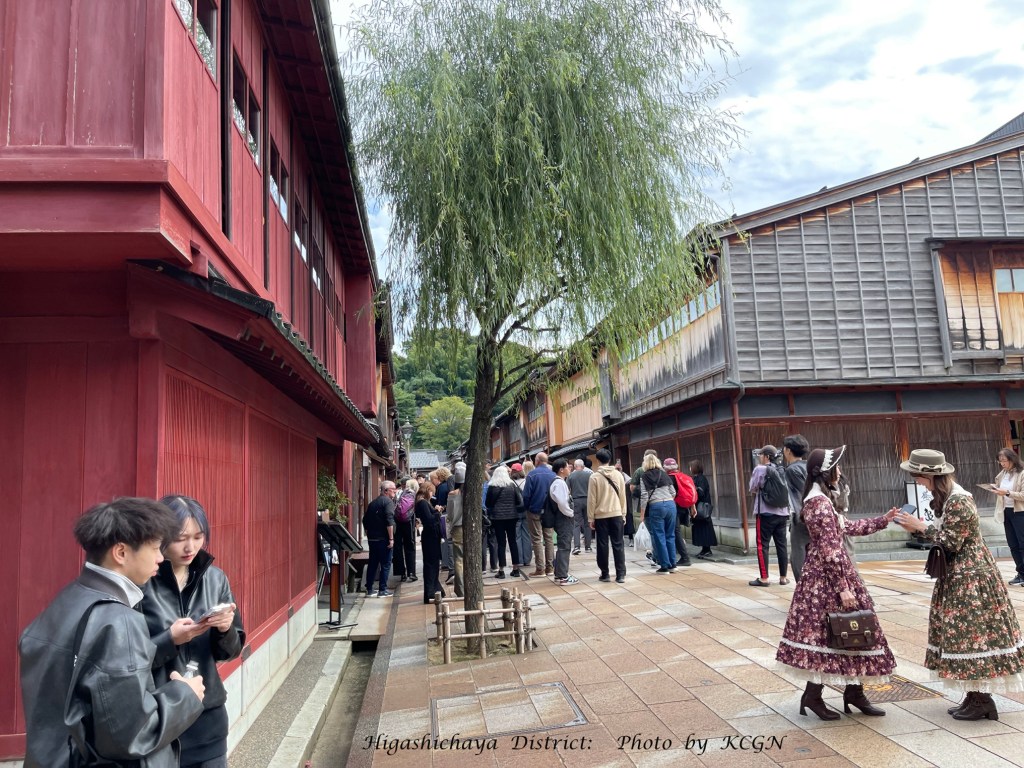
Wander through the narrow streets of Higashi Chaya District during the day to visit a teahouse open to the public, the chaya that have been converted into cafes and restaurants, or shops selling gold-leaf products. Shima and Kaikaro are teahouses that are open to the public and have interesting displays inside.
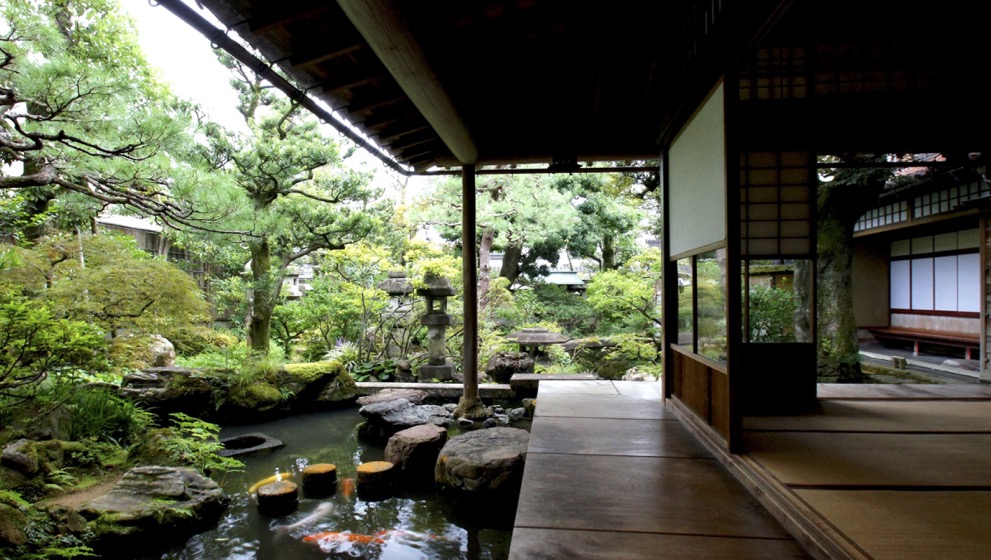
Nomurake House: Toshiie Maeda entered Kanazawa Castle in 1583. As high-ranked followers of the Daimyo, the Denbei Nobusada Nomura family served as the horse guard group leader, and in various roles for the shogunate administrators over 11 generations, seeing their yearly salary increase from 1000 koku (1 koku =180.4 L of rice) to 1200 koku. They are a family with a deep history, who possessed a house site over 1000 tsubo (1 tsubo = approx 3.3m2) until the 4th year of the Meiji era (1871) when the Tokugawa Shogunate system was abolished.
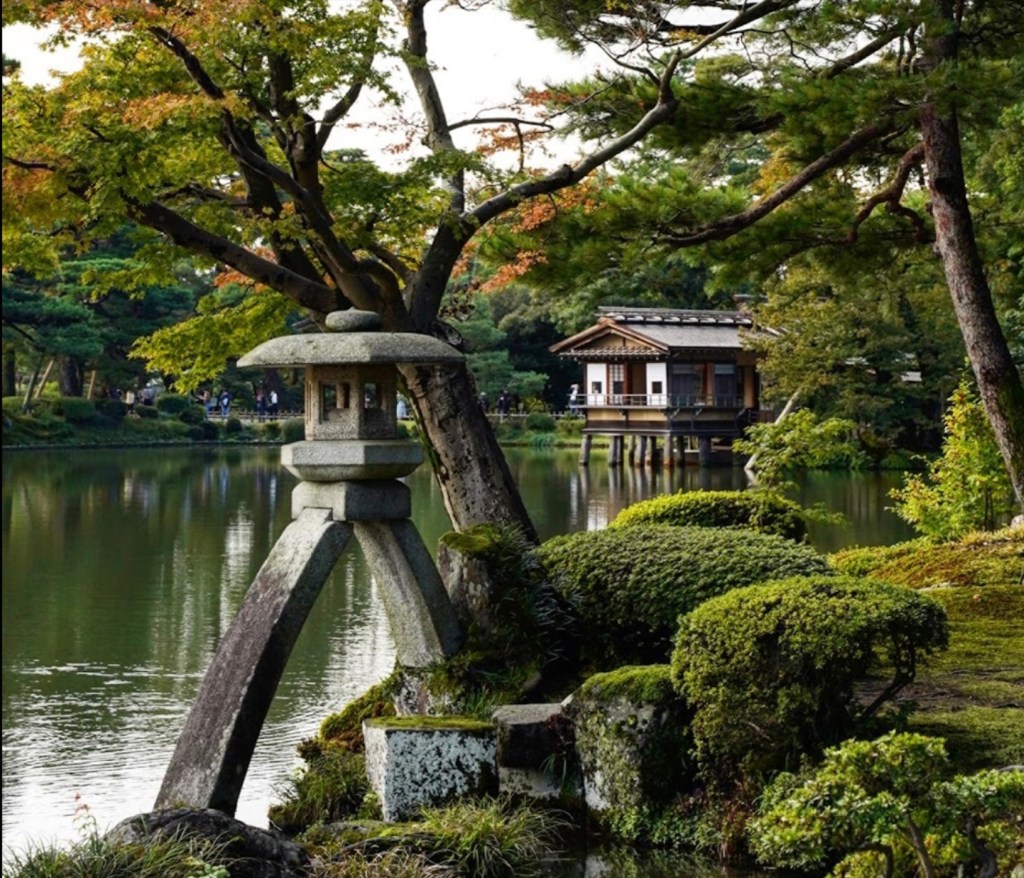
Kenroku-en Garden
In 1676, the fifth lord Tsunanori Maeda relocated the construction office in Renchi garden back to the castle grounds to construct a villa on the vacant lot. A garden built around the villa.
It is the beginning of Kenroku-en garden development. The name of “Kenroku-en” was given by Sadanobu Matsudaira, a member of shogun’s council of elders, on the request from the 11-th Lord Narinaga Maeda.
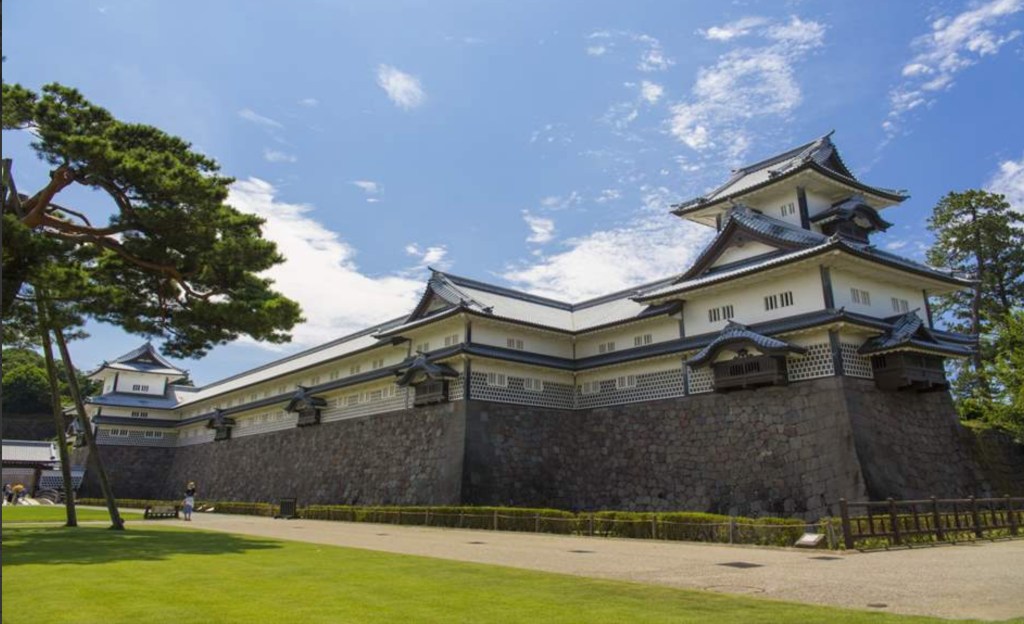
Kanazawa Castle: In 1546, Kanazawa MIDO was built as a central Cathedral of the Buddhism Jodo Shinshu in Kaga, and became a peasant kingdom ruled by the people and the priests. In 1580, Morimasa Sakuma conquered the Mido and replaced to Kanazawa Castle with surrounding moats and towns. After the battle at Shizugatake, Toshiie Maeda became the lord of the castle and started to reconstruct the castle and the towns in 1583, based on the plan presented by Ukon Takayama (Christian Daimyo) and other retainers.
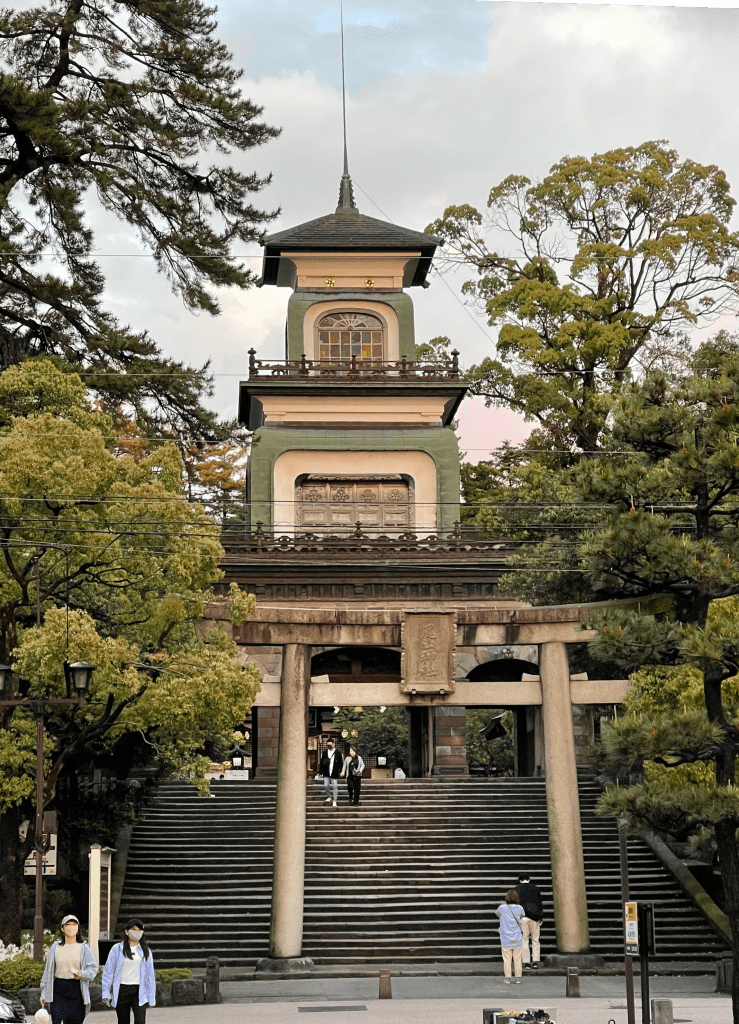
Oyama Shrine in Kanazawa is highly praised for its unique, colorful stained-glass Shinmon Gate, which blends Japanese ,Chinese and European styles, making it a must-see, photogenic spot. Visitors appreciate the calm, beautiful strolling garden with a pond and bridges, often finding it a peaceful escape near the city center.
NonProfit Organization Kanazawa Culture Guide Network
https://kcgns.org
mail adress: nishinobuims@gmail.com
 NonProfit Organization Kanazawa Culture Guide Network